
What Drives Roof Replacement Costs in 2026 (and How to Avoid Them)

G

By refinedsurfaces

Last updated: September 11, 2026

Enjoyed This Guide? Add GoNano As A Preferred Source On Google To See More Like It.
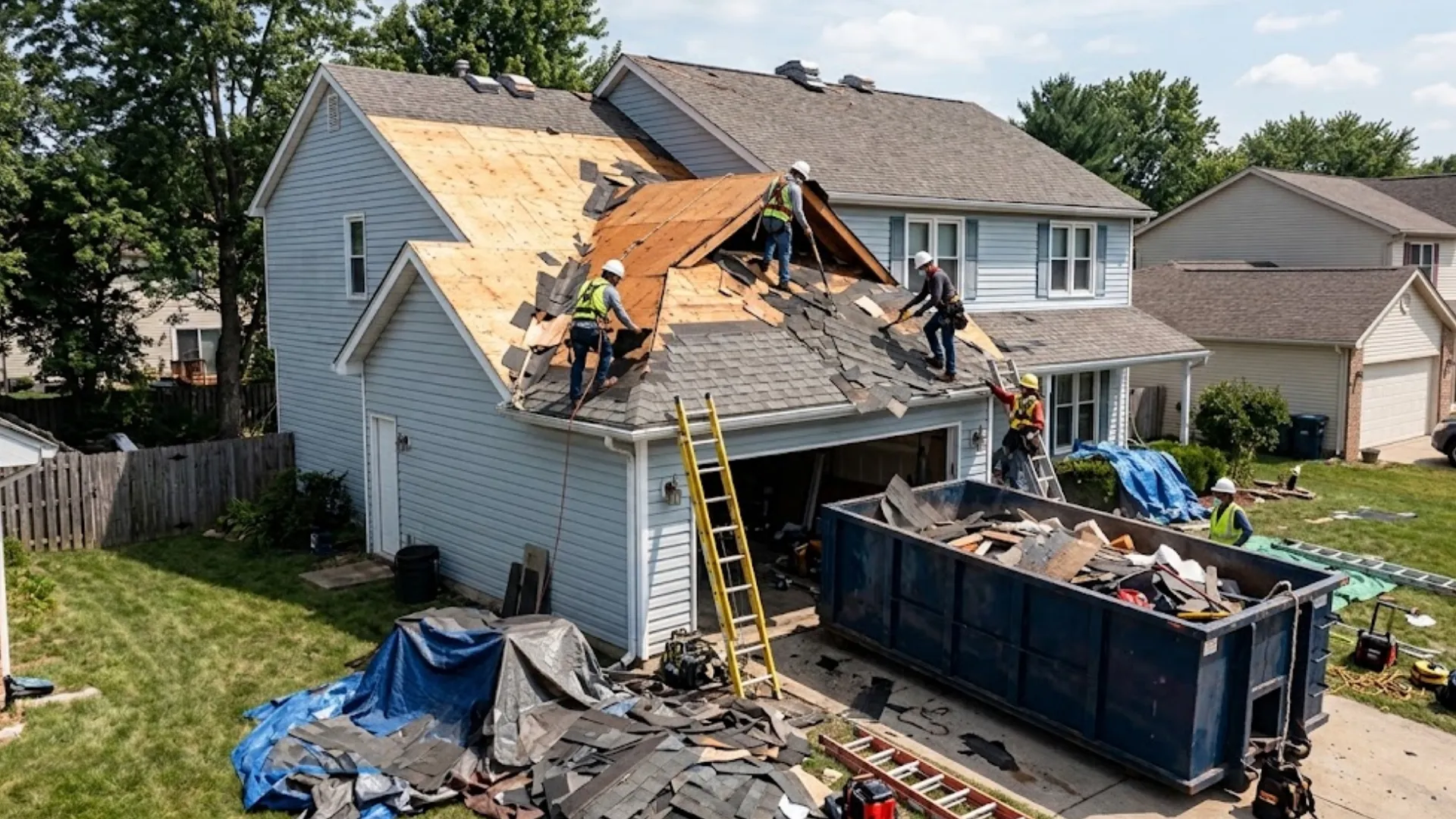
A full asphalt-shingle roof replacement in 2026 typically runs $20,000 to $40,000 or more, and the price is driven mostly by materials, labor, tear-off and disposal, and the hidden decking repairs that surface once the old roof is off. Understanding those cost drivers is worth it for one reason: if your roof is aging but still structurally sound, you may be able to avoid most of them.

The Real Cost Drivers

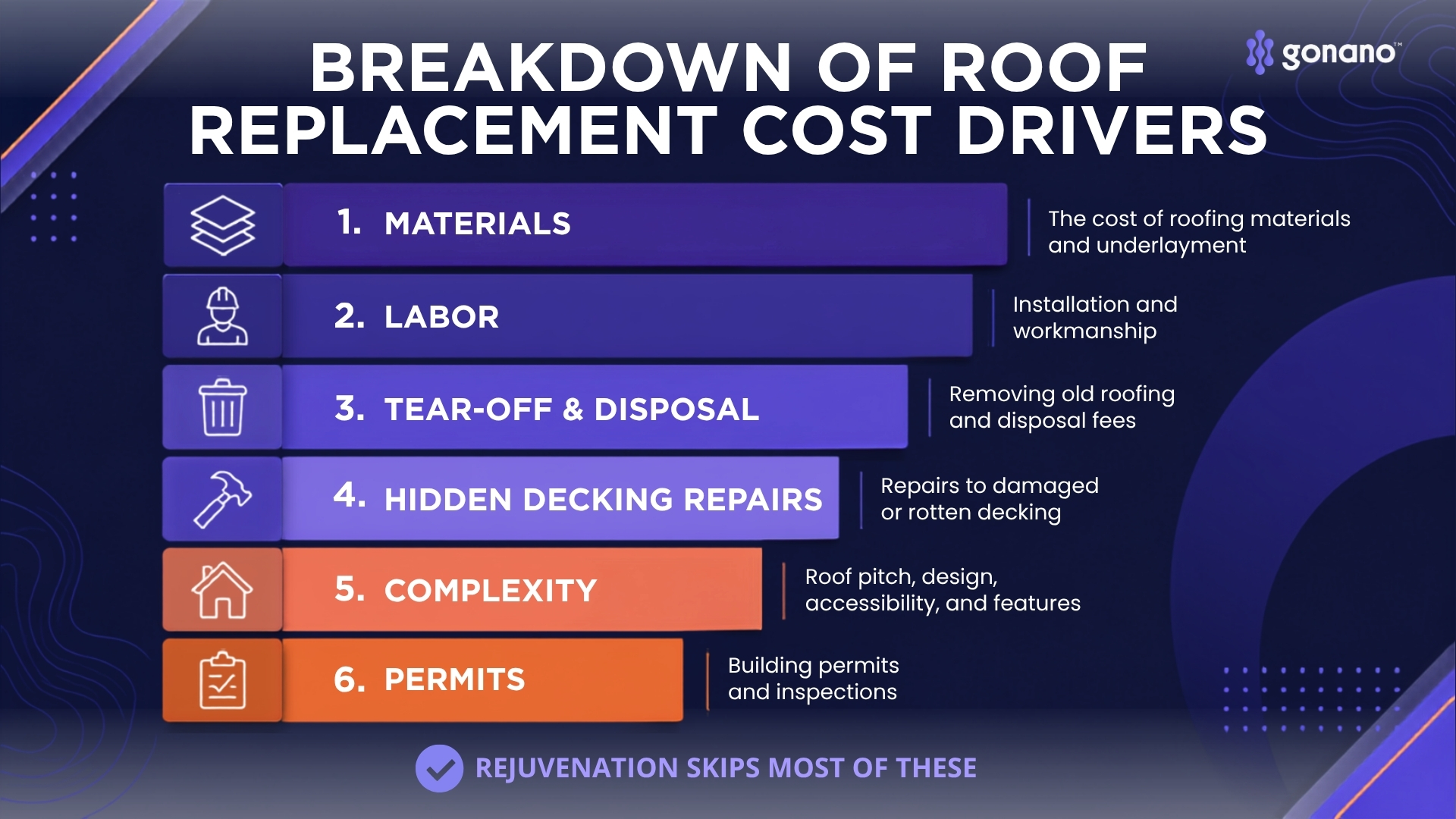
Here’s where the money actually goes when you replace a roof:

01

Shingle materials.

Asphalt shingle prices have climbed faster than inflation for several years running, so the material line alone is higher than most homeowners expect.

02

Labor.

Tear-off and re-installation is labor-intensive, and skilled crews are in demand, so labor is often the single largest line item.

03

Tear-off and disposal

Removing the old roof and hauling tons of shingle debris to the landfill carries real cost, and it isn’t always included in the headline quote.

04

Hidden decking repairs.

You don’t find out the plywood underneath is rotted or soft until the old roof is off, and deck repair is a common “surprise” add-on discovered mid-project.

05

Roof complexity.

Steep pitch, multiple valleys, dormers, skylights, and height all raise the price beyond a simple size calculation.

06

Permits and regional factors

Local permit costs, code requirements, and regional labor rates all move the number.

07

Market and insurance pressure.

Rising prices and insurers pushing homeowners toward replacement mean a lot of roofs get torn off while they still have usable life left.
The Part Homeowners Miss: the New Roof's Warranty

Part of what’s supposed to justify the cost is the warranty on the new shingles, but read the fine print before you count on it. Manufacturer asphalt-shingle warranties are typically heavily prorated: full coverage lasts only a short initial window, then drops to a fraction of material cost based on the roof’s age, and labor and tear-off are usually excluded. In practice, a defect a few years into a “30-year” roof can net a few hundred dollars against a repair that costs thousands.

Tim Carter’s book Roofing Ripoff documents how often modern shingles fail well before their warranty term.

So a big replacement bill often comes with weaker protection than the number on the label suggests, a point we break down further in our cost-vs-replacement guide.


How to Avoid Most of These Costs

Here’s the key: most of those cost drivers only apply if you tear the roof off. If your roof is aging but structurally sound (losing granules, fading, or stiffening, but not leaking or failing), you likely don’t need to. Structural Roof Rejuvenation restores your existing shingles instead of replacing them: it replenishes the oils they lose as they age and adds nano-penetrating reinforcement that bonds with the shingle at the molecular level. No tear-off, no disposal, no decking surprises, no multi-day project, and a fraction of the replacement cost.

It’s also backed by evidence, not just a lower price. GoNano’s system carries more than $1 million in independent testing, including a Green Center (now Impact Chemistry) test in which a 15-year-old roof treated with NuRoof Revive outperformed a roof with brand-new shingles, plus UL 2218 Class 4 (impact), ASTM D3161 Class F (wind, rated to 110 mph), and UL 790 Class A (fire). A single GoNano application carries a warranty up to 20 years, 100% non-prorated on the full treatment, and it’s transferable.

When Replacement Is Still the Right Call

If the roof is genuinely failing, with active leaks, widespread missing shingles, or rotted decking, replacement is the right investment, and an honest contractor will tell you so. Rejuvenation is for the roof that’s aging but sound. The way to know whether your roof is a candidate is a professional assessment before you sign a replacement contract.

The Bottom Line

Roof replacement is expensive in 2026 because of materials, labor, tear-off, and the surprises hiding under the old roof, and the warranty on the new one is usually weaker than it looks. If your roof still has structural life in it, rejuvenation lets you skip most of that. Get an assessment before you assume replacement is your only option.

Continue exploring

Structural Roof Rejuvenation works best when paired with a clear understanding of why roofs fail and what the alternatives cost. If you’re evaluating ice dam damage, you’ve likely come across everything from heat cables to full roof replacement. The guides below address the most common recommendations and explain what may actually be causing the problem.

Category Guide

September 12, 2026

What Is Structural Roof Rejuvenation? How It Restores Asphalt Shingles From Within

Structural Roof Rejuvenation

September 11, 2026

Does Roof Rejuvenation Actually Work? An Honest Comparison, Backed by Independent Testing

Structural Roof Rejuvenation

September 11, 2026

Roof Rejuvenation Cost vs. Roof Replacement: Is It Worth It?

Roof Maintenance

September 11, 2026

How Long Do Asphalt Shingles Last? Signs Your Roof Is Aging (and What to Do)

Roof Maintenance

September 11, 2026

Get Your Roof Ready for Winter:A Fall Roof-Prep Guide

Roof Replacement Costs

September 11, 2026

What Drives Roof Replacement Costs in 2026 (and How to Avoid Them)

Frequently Asked Questions

A full asphalt-shingle replacement commonly runs $20,000 to $40,000 or more, with large, steep, or complex roofs running higher, before any surprise decking repairs.


Materials and labor are the largest, followed by tear-off and disposal, hidden decking repairs discovered mid-project, roof complexity (pitch, valleys, dormers), and permits.

 
 
Read the fine print. Manufacturer shingle warranties are usually heavily prorated and exclude labor and tear-off, so the real payout after the early years is a fraction of the repair cost.
Rejuvenation is a fraction of an $8,000 to $25,000+ replacement because it restores rather than replaces. Exact savings depend on your roof and local replacement pricing.
Both. GoNano’s system is backed by over $1 million in independent testing (UL 2218 Class 4, ASTM D3161 Class F at 110 mph, UL 790 Class A) and an Impact Chemistry test where a 15-year-old treated roof outperformed brand-new shingles.
Shingle material prices have risen faster than inflation for several years, skilled labor is in demand, and tear-off, disposal, permits, and hidden decking repairs all add up.
The most common surprise is rotted or soft decking under the old shingles, which isn’t visible until tear-off. Disposal fees and code-required upgrades can also be under-quoted.
If your roof is aging but structurally sound, roof rejuvenation restores your existing shingles instead of tearing them off, avoiding materials, labor, disposal, and decking surprises at a fraction of the cost.
If the roof is aging but sound, with granule loss, fading, or brittleness and no active leaks, it’s likely a candidate. If it’s leaking or structurally failed, replacement is the right call.
Get a professional assessment to confirm whether the roof is truly failing or just aging. A Certified GoNano Contractor can tell you whether you can avoid the replacement entirely.

Find a Certified Contractor Near You

Secure your roof’s future with the world’s only Structural Roof Rejuvenation technology.