How Climate Extremes Shorten YourAsphalt Roof’s Life

G

By refinedsurfaces

Last updated: September 11, 2026

Enjoyed This Guide? Add GoNano As A Preferred Source On Google To See More Like It.
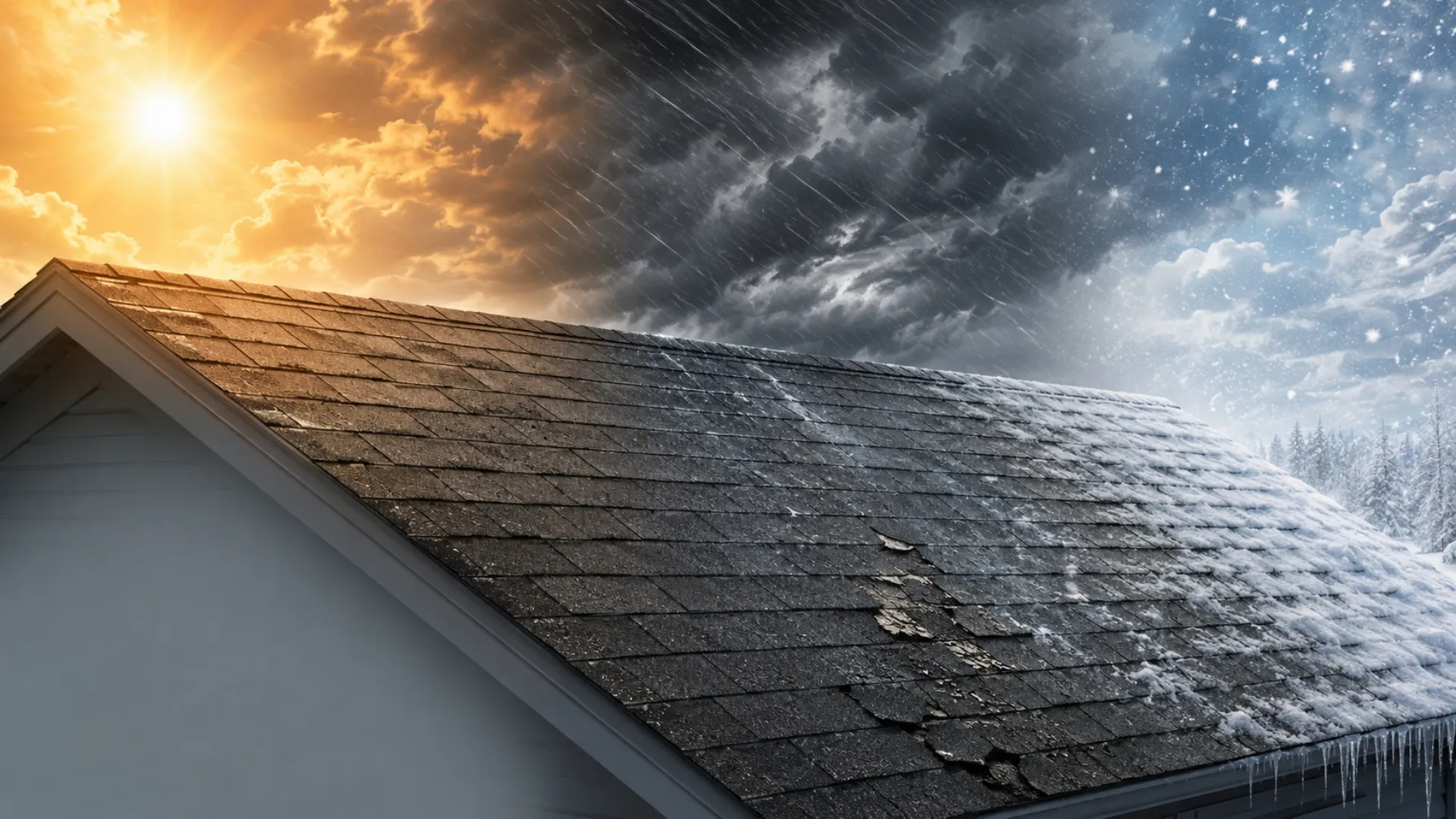
Asphalt shingles are rated for 15 to 30 years, but climate is the biggest reason real-world roofs rarely reach the top of that range. Intense heat, deep cold, freeze-thaw cycles, UV, and storms all drive out the oils that keep shingles flexible, and the harsher your climate, the faster your roof ages. Here’s how each force works, and how to slow it down.

Why Climate, Not Just Age, Sets the Clock

A shingle’s lifespan depends less on the number on the wrapper than on what the weather does to it. Asphalt shingles rely on petrochemical oils to stay flexible and waterproof, and every climate stress accelerates the loss of those oils. Two identical roofs installed the same day will age very differently in Phoenix versus Winnipeg. That’s why the question of how long asphalt shingles last always has the same real answer: it depends on your climate.

Heat and UV

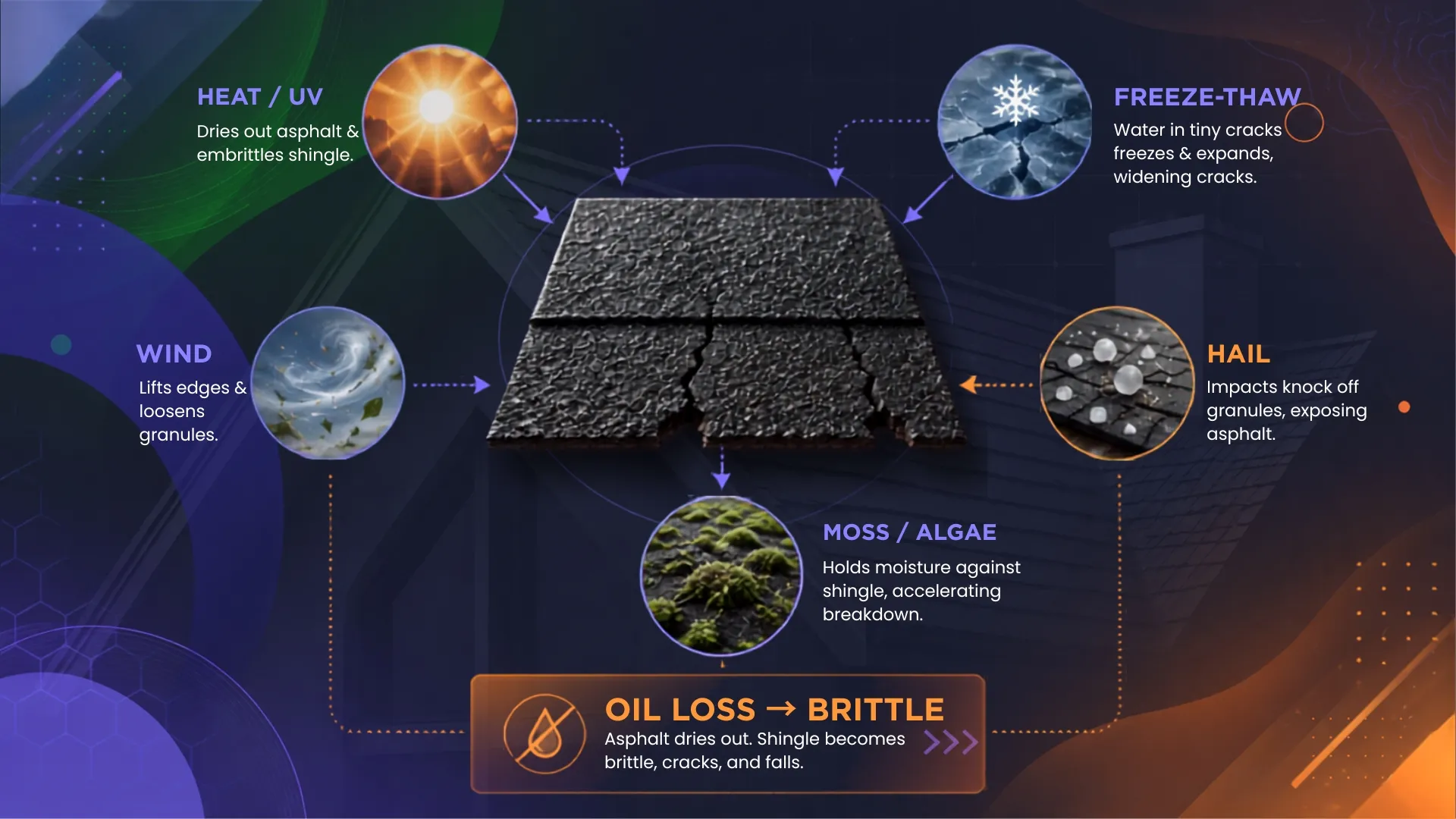
Prolonged high heat and relentless UV bake the oils out of shingles, causing them to dry, harden, and crack. Sun-facing roof planes age fastest, and dark shingles run hotter still. In hot, high-sun regions, thermal cycling of hot days and cooler nights also expands and contracts the shingle daily, working cracks open over time.

Cold and Freeze-Thaw

In cold climates the damage comes from water and ice. Moisture seeps into tiny cracks, freezes, expands, and pries them wider, then thaws and repeats, sometimes dozens of times a winter. Brittle, aging shingles that have already lost flexibility can’t move with the cycle, so they crack instead. Freeze-thaw is one of the hardest forces on a northern roof, and it’s why an aging roof heading into winter is especially vulnerable. Here’s how to get your roof ready for winter.

Storms, Wind, and Hail

Wind lifts and flexes shingles and tears at edges and corners; hail bruises and fractures the surface and knocks off protective granules; heavy rain finds every weakened seam. A single severe storm can undo years of a roof’s remaining life, and a roof that’s already dried out and brittle has far less ability to take the hit. See how rejuvenation stands up to hail, wind, and fire.

Humidity, Moss, and Algae

In damp and humid regions, moss and algae hold moisture against the shingle, accelerate granule loss, and lift shingle edges as they grow. What looks like a cosmetic stain is often an active driver of aging. That green tinge on a north-facing slope isn’t just ugly. It’s doing damage the whole time you’re ignoring it.
What This Means for US and Canadian Roofs

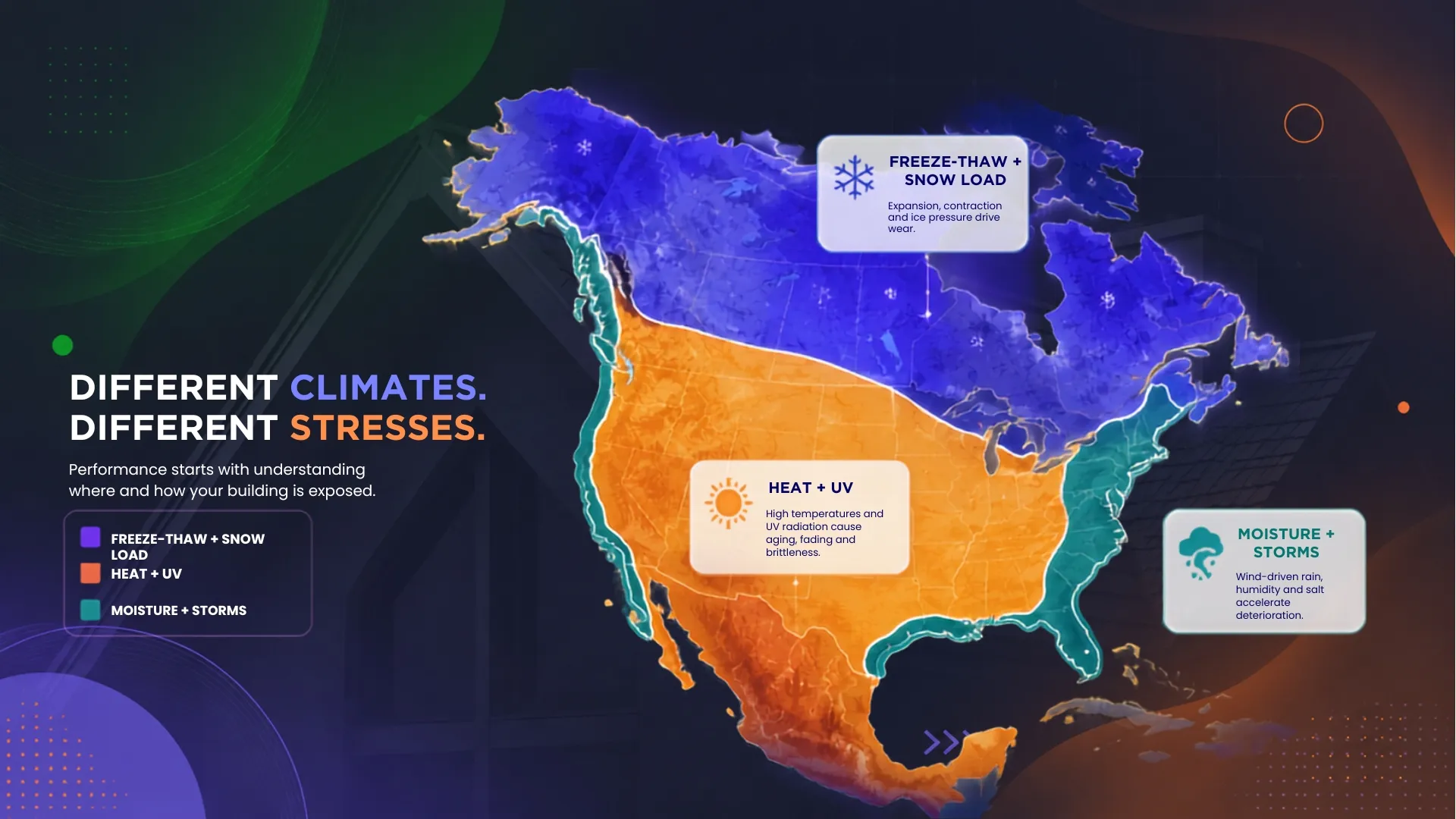
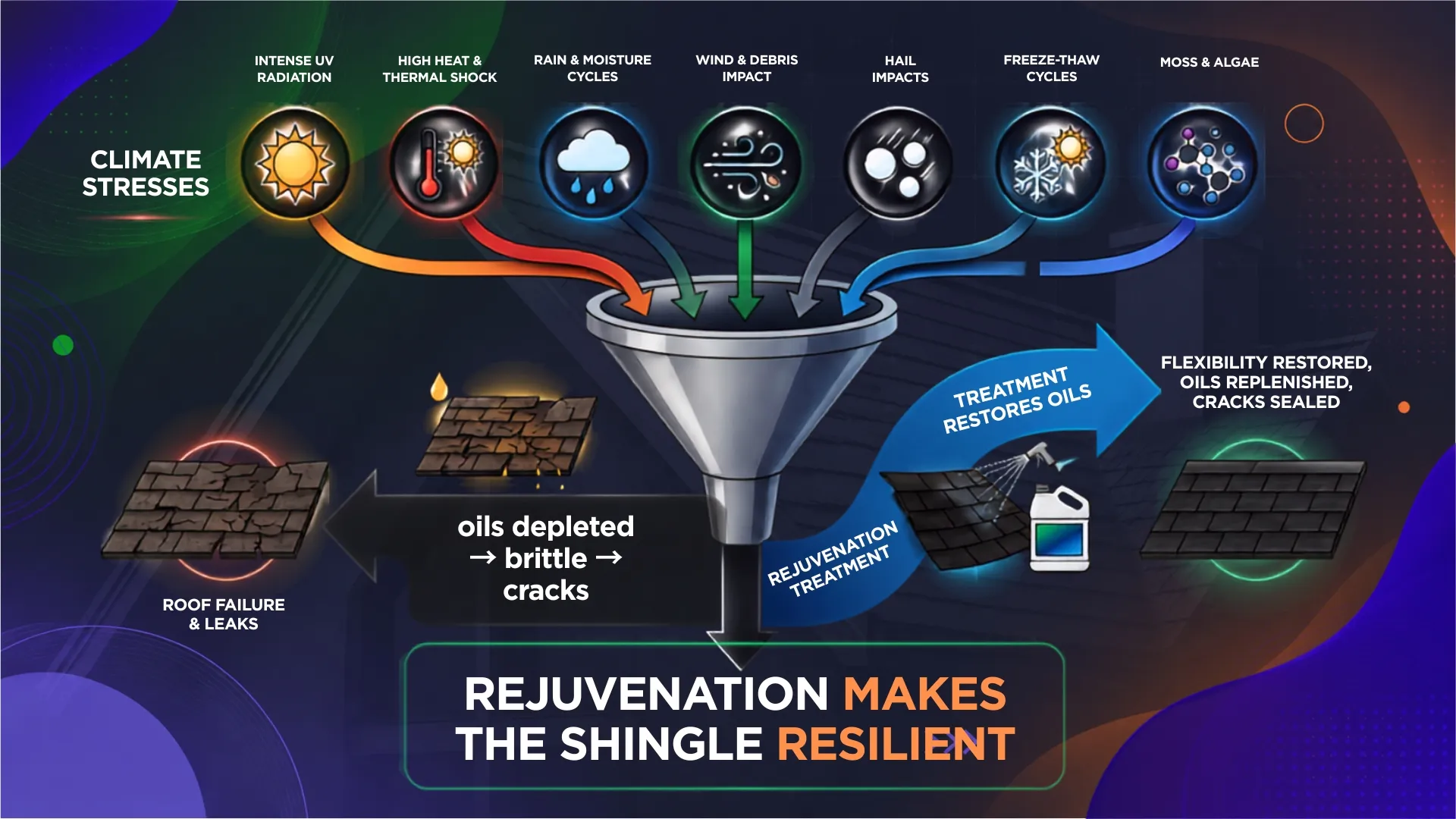
Across the northern US and Canada, freeze-thaw and snow load dominate; across the southern and western US, heat and UV lead; coastal and humid regions add moisture and storms. The common thread is oil depletion, because every one of these forces ages the roof by drying it out. That’s also the opening: if the process is oil loss, the defense is restoring those oils before the shingle becomes brittle.

How to Slow the Clock

You can’t change your climate, but you can slow its effect on your roof. Keep gutters clear and the attic ventilated, address moss and algae early, and most importantly, don’t wait until shingles are brittle. Structural Roof Rejuvenation replenishes the oils climate stress removes and adds nano-penetrating reinforcement that bonds with the shingle at the molecular level, restoring flexibility so the roof can weather the next season instead of cracking through it.

01

Keep gutters clear

Prevent trapped water that freezes and backs up under shingles.
02

Ventilate the attic

Keep the roof deck evenly cold in winter and cooler in summer to reduce thermal stress.

03

Treat moss and algae early

Remove growth that holds moisture against the shingle and accelerates granule loss.

04

Restore before shingles turn brittle

Replenish the oils climate stress removes so shingles keep their flexibility.

04

Time treatment to your climate.

Treat before the hardest season, winter in freeze-thaw regions and peak heat in hot ones, after a professional assessment.
It’s backed by more than $1 million in independent testing, including a Green Center (now Impact Chemistry) test in which a 15-year-old roof treated with NuRoof Revive outperformed a roof with brand-new shingles, plus UL 2218 Class 4 (impact), ASTM D3161 Class F (wind, rated to 110 mph), and UL 790 Class A (fire). A single GoNano application carries a warranty up to 20 years, 100% non-prorated on the full treatment, and it’s transferable.

The Bottom Line

Climate, more than age, decides how long your roof really lasts, and every extreme works by drying your shingles out. Restore them before they turn brittle and you buy back years the weather would otherwise take.

Continue exploring

Structural Roof Rejuvenation works best when paired with a clear understanding of why roofs fail and what the alternatives cost. If you’re evaluating ice dam damage, you’ve likely come across everything from heat cables to full roof replacement. The guides below address the most common recommendations and explain what may actually be causing the problem.

Category Guide

September 12, 2026

What Is Structural Roof Rejuvenation? How It Restores Asphalt Shingles From Within

Structural Roof Rejuvenation

September 11, 2026

Does Roof Rejuvenation Actually Work? An Honest Comparison, Backed by Independent Testing

Structural Roof Rejuvenation

September 11, 2026

Roof Rejuvenation Cost vs. Roof Replacement: Is It Worth It?

Roof Maintenance

September 11, 2026

How Long Do Asphalt Shingles Last? Signs Your Roof Is Aging (and What to Do)

Roof Maintenance

September 11, 2026

Get Your Roof Ready for Winter:A Fall Roof-Prep Guide

Roof Replacement Costs

September 11, 2026

What Drives Roof Replacement Costs in 2026 (and How to Avoid Them)

Frequently Asked Questions

Climate is the biggest reason roofs rarely reach the top of their 15 to 30 year rating. Heat, cold, freeze-thaw, UV, and storms all drive out the oils that keep shingles flexible, aging the roof faster in harsher climates.
Water seeps into small cracks, freezes and expands to widen them, then thaws, repeatedly through winter. Aging, brittle shingles crack under this cycle instead of flexing, which can turn hairline cracks into leaks.
Yes. Wind lifts and flexes shingles and tears edges; hail fractures the surface and knocks off granules. A brittle, aged roof has far less ability to absorb storm impact.
In Canada and the northern US, freeze-thaw and snow load dominate; in the southern and western US, heat and UV lead. Both work by drying out and stressing the shingles.
It addresses the root cause, which is oil depletion. Rejuvenation replenishes the oils climate stress removes and restores flexibility, helping the roof withstand heat, cold, and storms.
Yes. Prolonged heat and UV bake the oils out of shingles, causing them to dry, harden, and crack. Sun-facing planes and dark shingles age fastest, and daily hot-cold cycling works cracks open over time.
Both shorten lifespan, in different ways. Heat and UV dry shingles out; cold and freeze-thaw crack them. The common result is faster oil loss and earlier aging.
Yes. In humid climates they hold moisture against the shingle, accelerate granule loss, and lift shingle edges as they grow, so they’re an active aging driver, not just a cosmetic issue.

Yes. Keep gutters clear and the attic ventilated, treat moss and algae early, and restore aging shingles before they turn brittle so they can flex through weather instead of cracking.

 
Before shingles become brittle, and ideally ahead of the hardest season: before winter in freeze-thaw regions, before peak heat in hot ones. A professional assessment confirms timing.

Find a Certified Contractor Near You

Secure your roof’s future with the world’s only Structural Roof Rejuvenation technology.