
Last updated: September 11, 2026
Enjoyed This Guide? Add GoNano As A Preferred Source On Google To See More Like It.
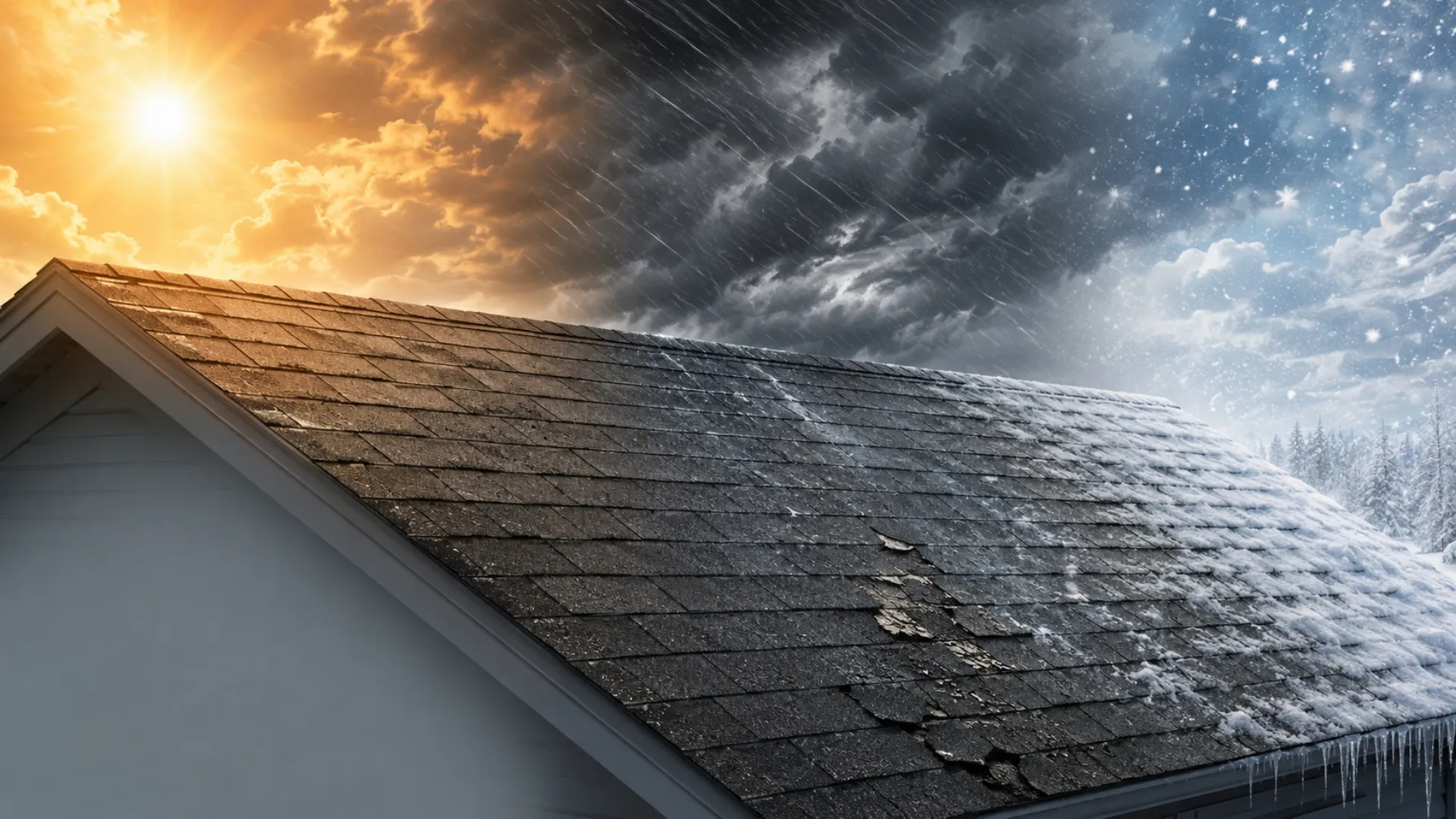
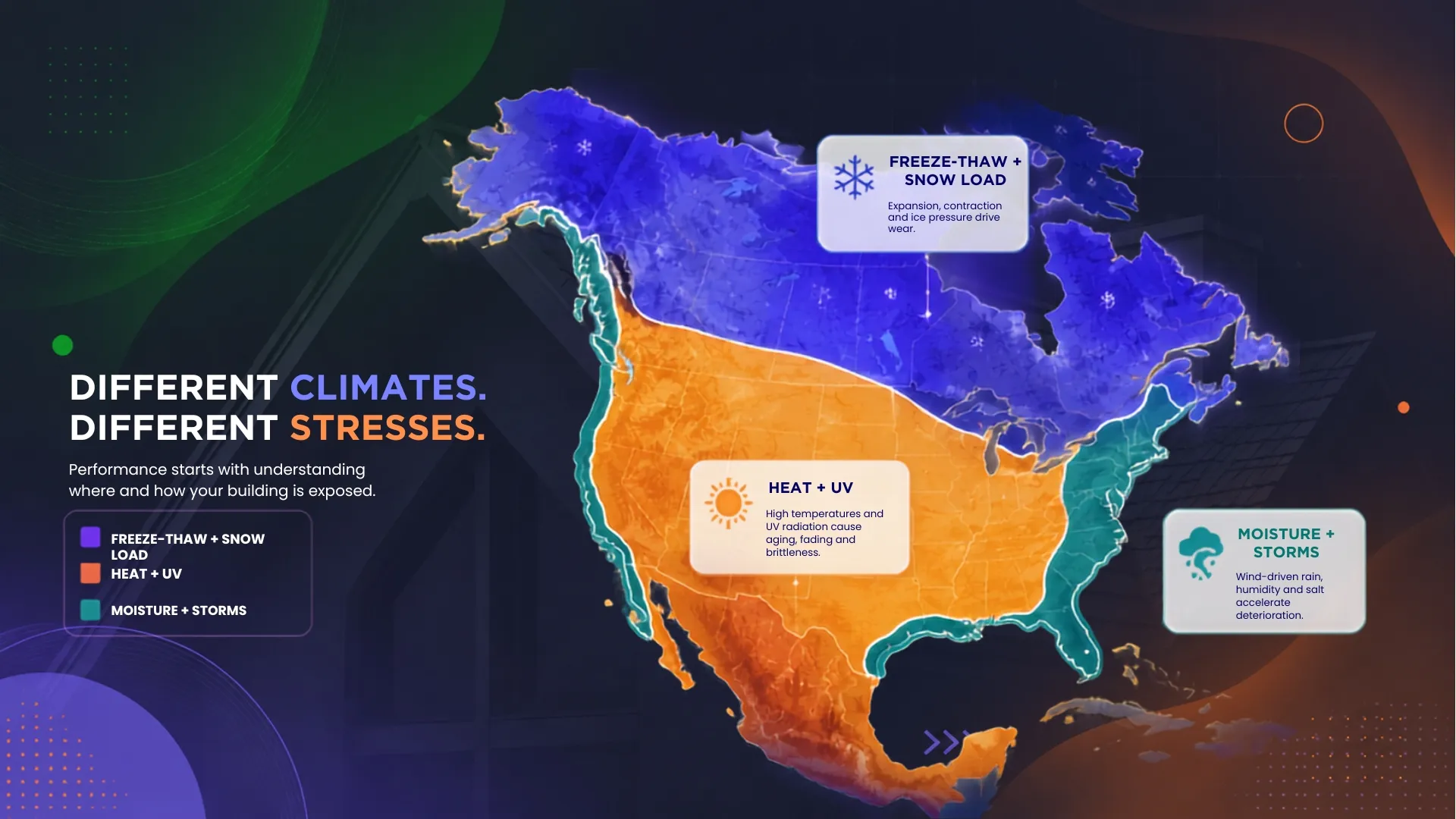
A shingle’s lifespan depends less on the number on the wrapper than on what the weather does to it. Asphalt shingles rely on petrochemical oils to stay flexible and waterproof, and every climate stress accelerates the loss of those oils. Two identical roofs installed the same day will age very differently in Phoenix versus Winnipeg. That’s why the question of how long asphalt shingles last always has the same real answer: it depends on your climate.
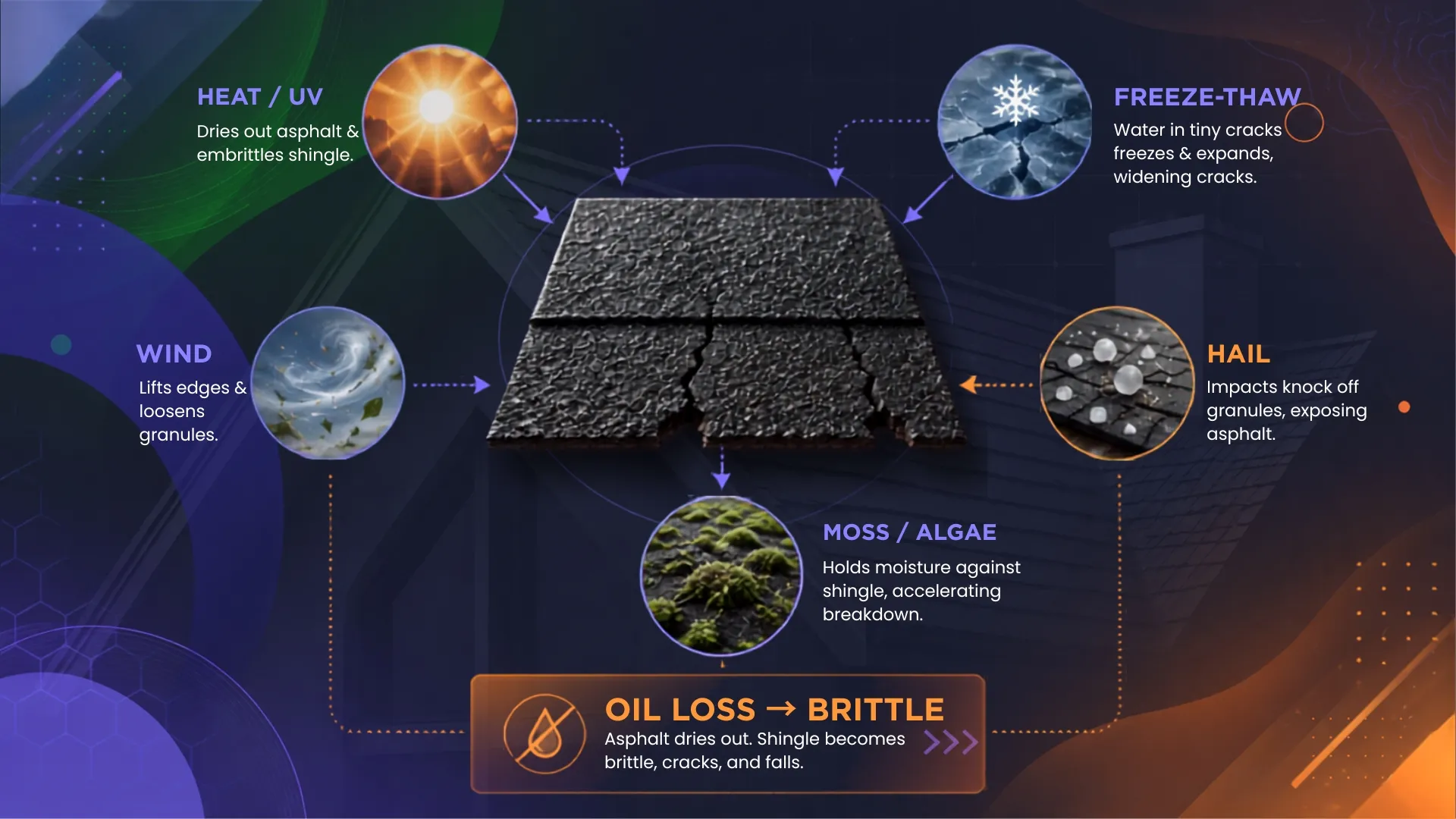
Prolonged high heat and relentless UV bake the oils out of shingles, causing them to dry, harden, and crack. Sun-facing roof planes age fastest, and dark shingles run hotter still. In hot, high-sun regions, thermal cycling of hot days and cooler nights also expands and contracts the shingle daily, working cracks open over time.
In cold climates the damage comes from water and ice. Moisture seeps into tiny cracks, freezes, expands, and pries them wider, then thaws and repeats, sometimes dozens of times a winter. Brittle, aging shingles that have already lost flexibility can’t move with the cycle, so they crack instead. Freeze-thaw is one of the hardest forces on a northern roof, and it’s why an aging roof heading into winter is especially vulnerable. Here’s how to get your roof ready for winter.
Wind lifts and flexes shingles and tears at edges and corners; hail bruises and fractures the surface and knocks off protective granules; heavy rain finds every weakened seam. A single severe storm can undo years of a roof’s remaining life, and a roof that’s already dried out and brittle has far less ability to take the hit. See how rejuvenation stands up to hail, wind, and fire.
In damp and humid regions, moss and algae hold moisture against the shingle, accelerate granule loss, and lift shingle edges as they grow. What looks like a cosmetic stain is often an active driver of aging. That green tinge on a north-facing slope isn’t just ugly. It’s doing damage the whole time you’re ignoring it.
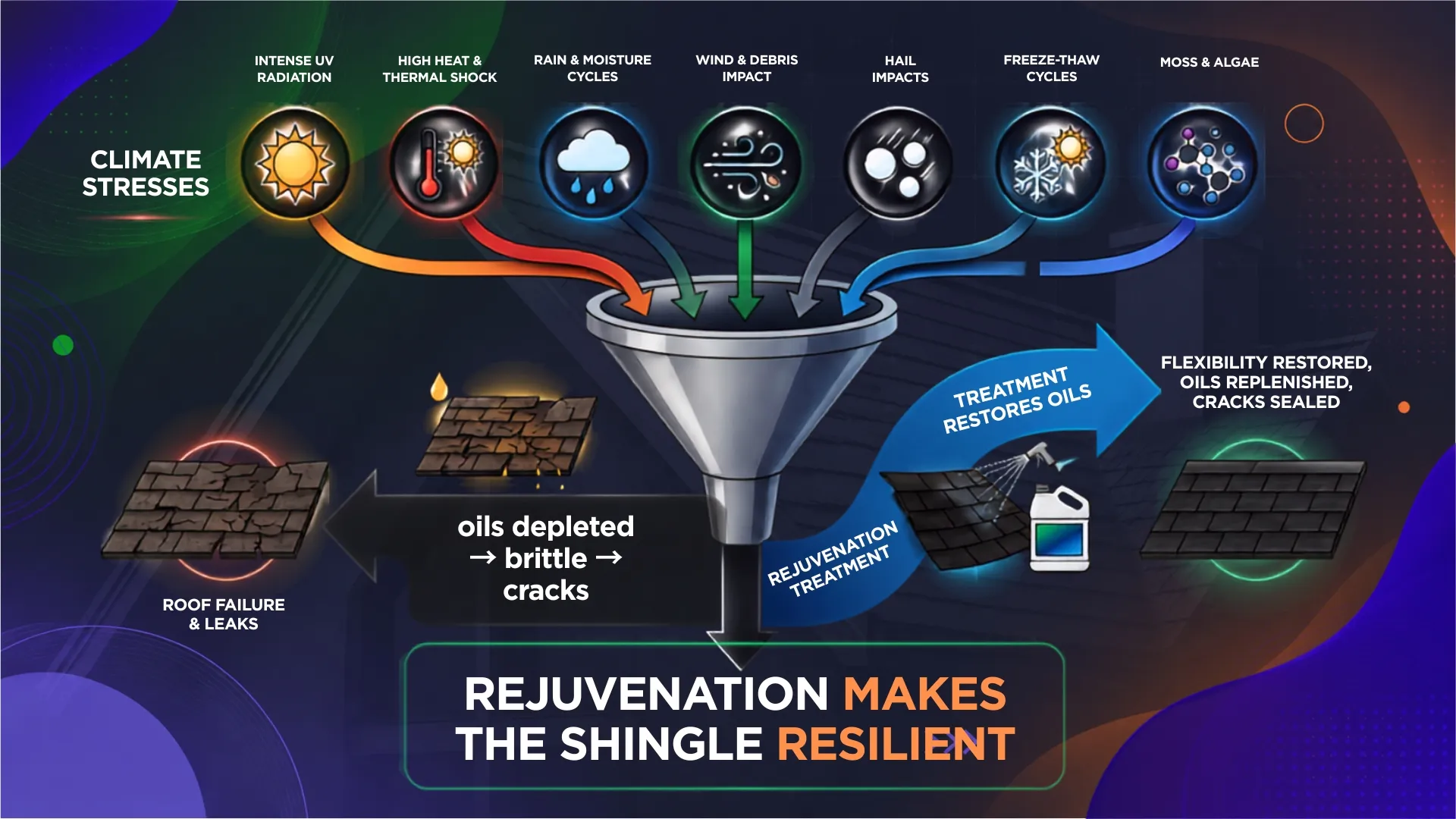
You can’t change your climate, but you can slow its effect on your roof. Keep gutters clear and the attic ventilated, address moss and algae early, and most importantly, don’t wait until shingles are brittle. Structural Roof Rejuvenation replenishes the oils climate stress removes and adds nano-penetrating reinforcement that bonds with the shingle at the molecular level, restoring flexibility so the roof can weather the next season instead of cracking through it.
Prevent trapped water that freezes and backs up under shingles.

Structural Roof Rejuvenation works best when paired with a clear understanding of why roofs fail and what the alternatives cost. If you’re evaluating ice dam damage, you’ve likely come across everything from heat cables to full roof replacement. The guides below address the most common recommendations and explain what may actually be causing the problem.
Yes. Keep gutters clear and the attic ventilated, treat moss and algae early, and restore aging shingles before they turn brittle so they can flex through weather instead of cracking.
